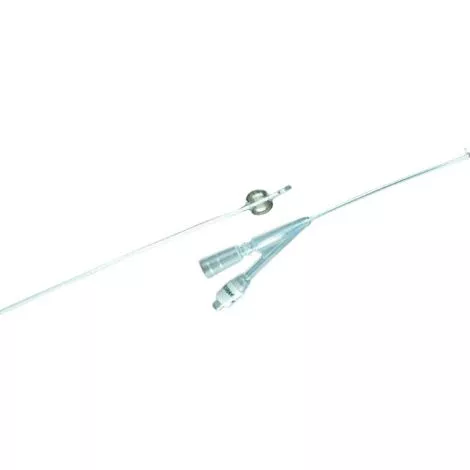
Bard Uncoated Silicone Foley Catheter
- Reduces friction and improves patient comfort
- For single-patient use
- Sterile
- Latex free
- Foley Catheter Deflation
- Patient Education Guide
What to buy with Bard Two-Way Foley Catheter
- Bard StatLock Foley Stabilization Device – Adult
- Deluxe Catheter Bag
How does a Foley Catheter work?
- Foley catheter acts as a drain to empty the bladder
- It is a thin, hollow tube made of soft, flexible material
- It is passed through the urethra into the bladder
- The catheter is held in place by a small water-filled balloon which is inflated in the bladder to keep the catheter from falling out while one goes about his normal activities
- Urine will automatically drain out of the bladder into the bag which is attached to the catheter
Catheter Inflation:
- Ensure that the Bard Foley catheter balloon is positioned well within the patient’s bladder. Slowly, with a gentle, constant force, inflate the Bard Foley catheter balloon with the volume prescribed on the package
- Note that the 5cc balloon must be inflated with between 9cc to 10cc of sterile water
- Improperly inflated Bard Foley catheter balloons may cause drainage and deflation difficulties
- Using fluid other than sterile water may cause the balloon not to empty properly, especially after long dwell times
Catheter Deflation:
- Select a luer slip syringe
- Slide the plunger of the syringe up and down the barrel of the syringe several times to loosen it up
- Compress the plunger all the way and then pull back the plunger slightly so that it does not adhere to the front of the syringe barrel
- Gently insert the syringe into the catheter valve
- Do not use more force than is required to make the syringe stick in the valve
- Allow the pressure within the balloon to force the plunger back and fill the syringe with water
- If you notice slow or no deflation, re-seat the syringe gently. Once again, allow the balloon to deflate slowly on its own
- If the balloon does not deflate, reposition the patient.
- Ensure that the catheter is not in traction, the proximal end of the catheter is not compressed within the bladder neck
- Ensure that urine flows freely
- Attempt to deflate the balloon by using the pressure in the balloon to force water into the syringe as described above
- If the balloon still fails to deflate, apply very gentle slow aspiration. Aspiration that is too rapid, or too forceful, may cause the inflation lumen within the Foley catheter to collapse
- If permitted by hospital protocol, the valve arm may be severed
- If this fails, contact an adequately trained professional for assistance, as directed by hospital protocol