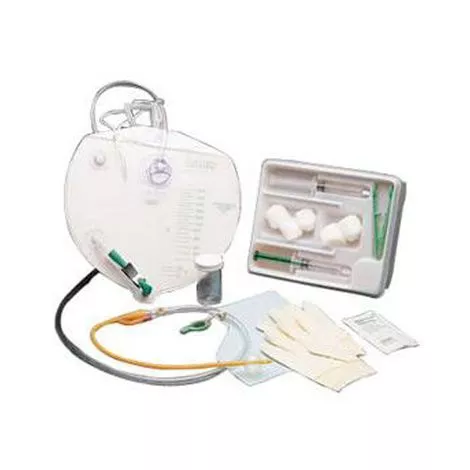
Lubricath Foley Tray Benefits
- Allows atraumatic insertion for enhanced patient comfort
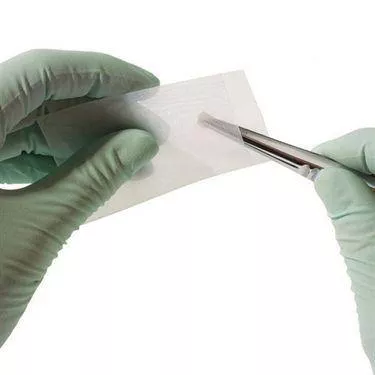
- Tamper-Evident Seal provides a clear indication of system opening, a key area of bacterial entrance to the urinary tract
- EZ-LOK Sampling Port eliminates the risk of needlestick injuries and allows for needle-free aspiration
More About Lubricath Foley Tray
Urine Drainage Bag Positioning:
- Never allow tubing to loop or kink
- Position the drainage bag at the foot of the bed
- Hold spine and lift meter to facilitate emptying
Points to Remember:
- Always keep the drainage bag lower than the catheter and the patients bladder
- When the patient is being transported on a gurney
- When the patient ambulates
- When the patient is using a wheelchair
Otherwise it can slow emptying of the bladder, causing patient discomfort and potentially increasing the risk of contamination system
EZ-Lok Guidelines for Drainage:
- Occlude drainage tubing a minimum of 3″ below the sampling port by kinking the tubing until urine is visible under the access site
- Swab surface of Bard EZ-Lok Sampling Port with antiseptic wipe
- Using aseptic technique, position the syringe in the center of the sampling port. The syringe should be held perpendicular to the surface of the sampling port (at approximately 80o-100o angle), press the syringe firmly and twist gently to access the sampling port
- Slowly aspirate urine sample into syringe and remove from sample port
- Unkink tubing and transfer urine specimen into specimen cup, discard syringe according to hospital protocol
- Follow established hospital protocol for specimen labeling and transport to lab
Inflation/Deflation Guidelines:
- Proper Catheter Inflation:
– Ensure that the Bard Foley catheter balloon is positioned well within the patients bladder.
– Slowly, with a gentle, constant force, inflate the Bard Foley catheter balloon with the volume prescribed on the package. Note that a 5cc balloon must be inflated with between 9cc and 10cc of sterile water.
– Improperly inflated Bard Foley catheter balloons may cause drainage and deflation difficulties.
- Catheter Deflation:
–Select a luer slip syringe
– Slide the plunger of the syringe up and down the barrel of the syringe several times to “loosen it up”
– Compress the plunger all the way and then pull back the plunger slightly so that it does not adhere to the front of the syringe barrel
– Gently insert syringe in the catheter valve
– Do not use more force than is required to make the syringe “stick” in the valve
– Allow the pressure within the balloon to force the plunger back and fill the syringe with water
– If the user notice slow or no deflation, re-seat the syringe gently, once again, allow the balloon to deflate slowly on its own
– If the balloon does not deflate, reposition the patient
– Ensure that the catheter is not in traction – the proximal end of the catheter is not compressed within the bladder neck
– Ensure that urine flows freely
– Attempt to deflate the balloon by using the pressure in the balloon to force water into the syringe
– If the balloon still fails to deflate, apply very gentle, slow aspiration, aspiration that is too rapid or too forceful, may cause the inflation lumen within the Foley catheter to collapse
– If permitted by hospital protocol, the valve arm may be severed
– If this fails, contact an adequately trained professional for assistance, as directed by hospital protocol