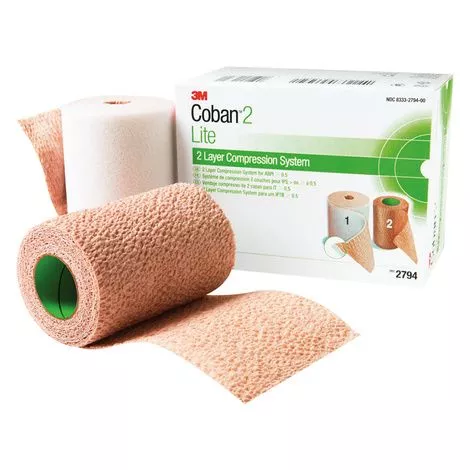
3M Coban 2 Layer Compression Wrap Features
- 3M Coban Two Layer Lite Compression Bandage System includes:
Roll 1 Comfort layer:- 4″ x 2.9yd (10cm x 2.7m), Unstretched
Roll 2 Compression Layer:
- 4″ x 5.1yd (10cm x 4.7m), Fully stretched length
- Designed to be more comfortable for patients less tolerant of compression
- Clinically proven to reduce slippage and improve patients’ daily living activities significantly
- Low profile design increases patient comfort and enables them to wear normal footwear
- Cost-effective as it halves application time and almost triples wear time
- Provides modified lite compression (25 30 mmHg) for patients with ABPI greater than or equal to 0.5
When to use Coban 2 Lite Compression?
3M Coban 2 layer compression system is suitable for the management of the following:
- Venous leg ulcers
- Edema
- Lymphedema
- Other clinical conditions where compression is appropriate
- It may be used for patients with an ABPI greater than or equal to 0.5
What to buy with Compression Bandages
- Graham-Field Lister Bandage Scissor
- McKesson Confiderm 3.8 Nitrile Exam Gloves
- Juzo Soft Knee High 30-40mmHg Compression Stockings
How to use Coban 2 Lite Compression Bandage?
Applying the Inner Comfort Layer of the Compression Dressing
- With the foot in a dorsiflexed position, start the application with a circular winding at the base of the toes, beginning at the fifth metatarsal head. Beginning at the fifth toe provides neutral, comfortable foot alignment.
- The second circular winding should come across the top of the foot so that the middle of the bandage width approximately covers the articulating aspect of the ankle joint.
- The next winding runs over the back of the heel. The posterior plantar surface of the foot is not completely covered.
- Please note that there may be a small fold of comfort layer material in the Achilles area. Guide this fold off the Achilles and lay it into the adjacent convex area. This fold will lay down smoothly without causing pain or discomfort when covered by the compression layer.
- Proceed up the leg to just below the fibular head, or the back of the knee with minimal overlap, using just enough tension to conform to the shape of the leg.
- Cut off excess material.
- Light pressure applied at the end of the bandage ensures that it stays in place during the application of the compression layer.
Applying the outer compression Layer of the Compression Bandage
- With the foot in a dorsiflexed position, start the application with a circular winding at the base of the toes, beginning at the fifth metatarsal head.
- The second circular winding should come across the top of the foot and around the back of the heel.
- Using the step eight technique, bring the roll back over the top of the foot, across the bottom of the foot, and back up to come around the back of the heel. Complete two or three figures of eight around the ankle, ensuring that the entire heel is covered with at least two layers.
- Proceed up the leg with 50% overlap to cover the entire inner comfort layer with at least two layers. Maintain consistent stretch throughout the process.
- End the wrap at the fibular head or just below the back of the knee and even with the top edge of the comfort layer. Cut off any excess material.
- Gently press and conform the entire surface of the application. This will ensure that the two layers bond firmly together, which helps reduce slippage during wear.
Note: If you detect gaps in the compression layer, you may apply additional compression layer material at full stretch.